Case Studies
Don't take our word for it. See the comics.
Different stories come to Metal Ninja Studios with different problems.
Some start as little more than an idea.
Some already exist as novels.
Some are finished comics that need an audience.
The best way to understand what Metal Ninja Studios does is to look at what happened when the pipeline had to work.
Real projects Finished comics Client feedback Platform-reported results
Proof Before the Pitch
Judge us by what the work had to accomplish.
A finished comic matters. So does everything required to get there.
These three projects started in very different places and required very different kinds of support.
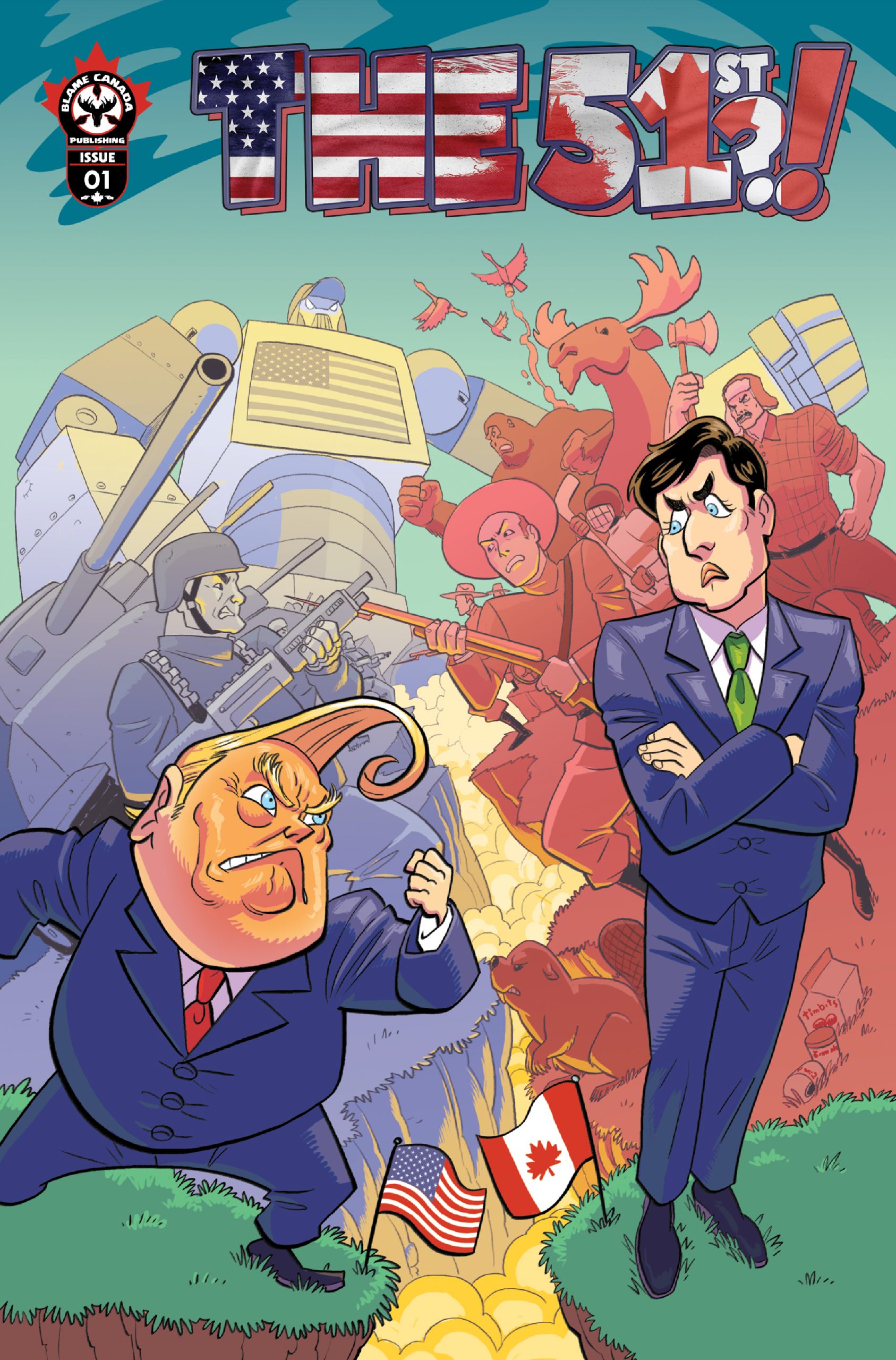
The 51st
From two sentences to print-ready in 84 days.
A time-sensitive idea needed an entire creative team, project management, and a production schedule capable of keeping pace with the real-world story behind it.
- 84 days to print-ready files
- 24-page finished issue
- Approximately 8 specialists coordinated
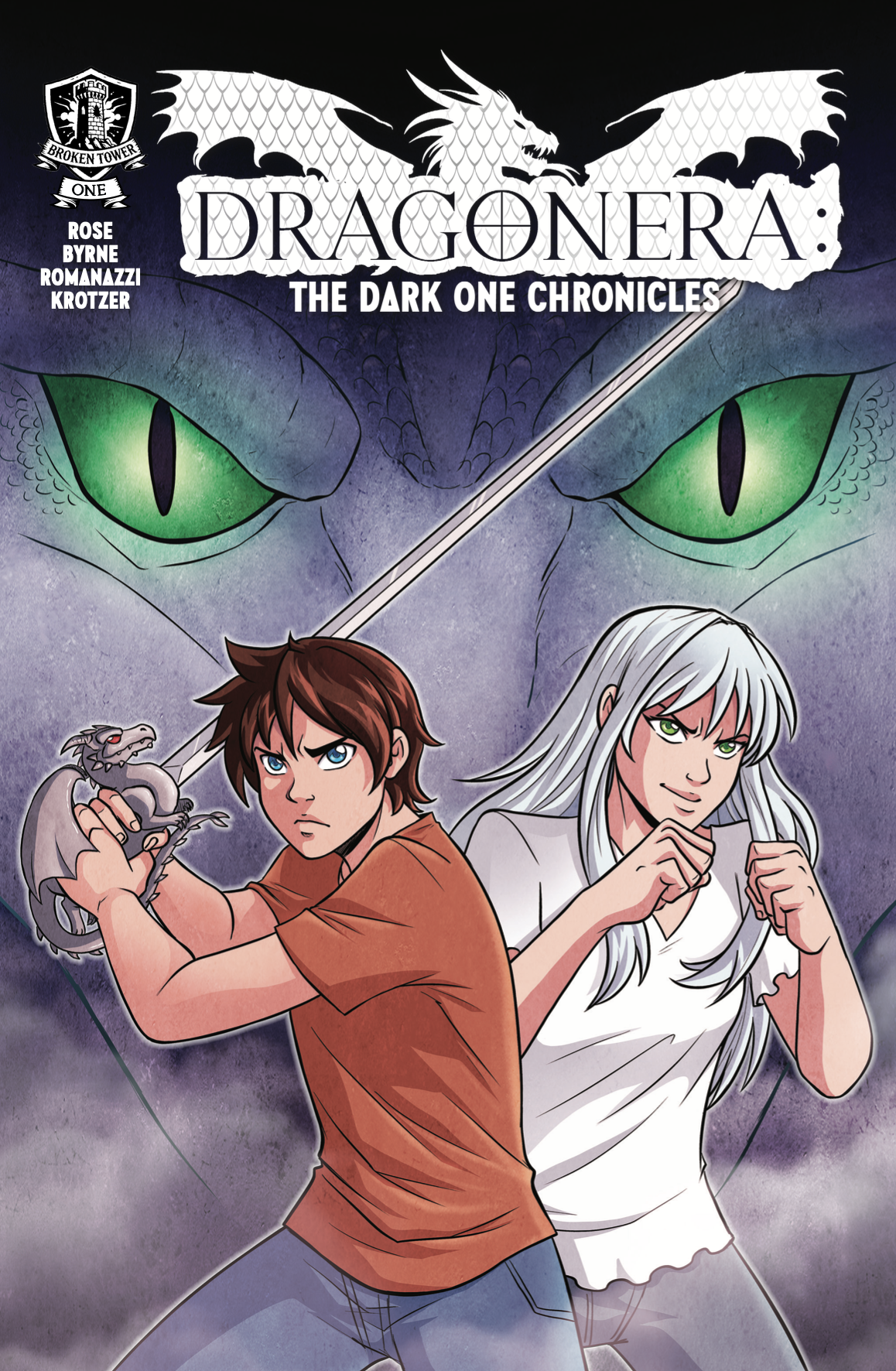
Dragonera
From a 202-page novel to a five-issue comic plan.
Charlie Rose already knew his characters, his world, and his story. What he did not know was how to turn that story into a comic without losing what made it his.
- 202-page source novel
- 20 chapters analyzed
- 5-issue adaptation architecture
- 2 issues completed
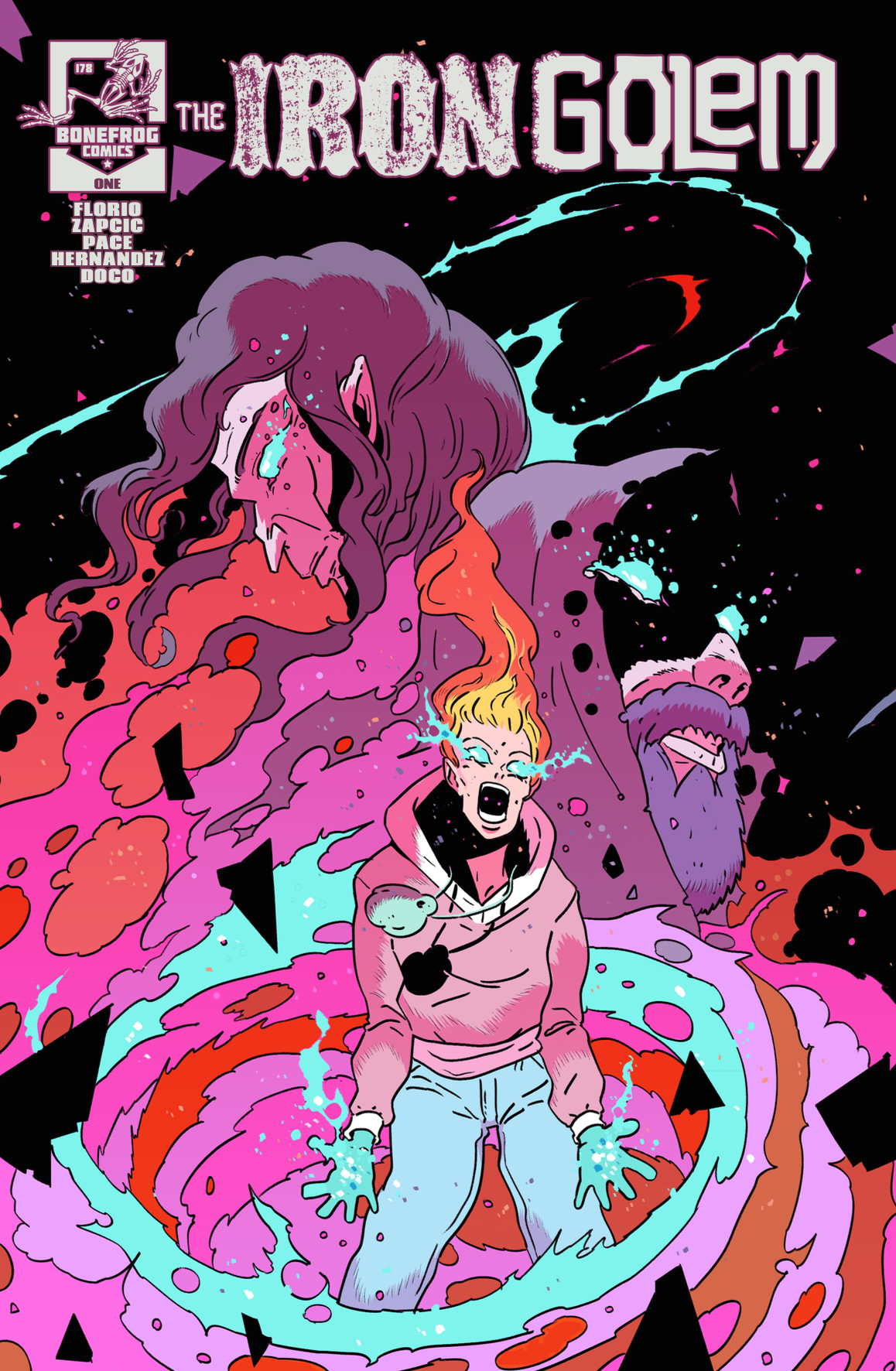
The Iron Golem
From zero Kickstarter audience to 206 backers.
Two first-time crowdfunding creators entered the campaign with no Kickstarter history and no existing audience on the platform. Thirty days later, the campaign had more than tripled its goal.
- $16,844 raised
- 337% funded
- 206 backers
- Issue two in production
Case Study 1 · The 51st
From two sentences to print-ready in 84 days.
The starting point
Spencer Voykin knew the comic business.
As a comic retailer who was already involved with another comic project, he also knew how much work it takes to get one finished.
When he came to Metal Ninja Studios with The 51st, however, the entire creative brief was essentially two sentences delivered to Joel over the phone.
The idea was a political satire built around the conversation happening at the time about Canada becoming the 51st state.
And the clock was already ticking.
The problem wasn't just making the comic.
It was making it while the idea was still relevant.
Spencer was already juggling multiple projects. Building another creative team himself would have meant finding and coordinating, at minimum:
- A writer
- An artist
- A letterer
- An editor
- A logo designer
- A project manager
Instead, Concept to Comic™ put those responsibilities inside one managed production pipeline.
Spencer could stay focused on the project itself without becoming the person responsible for moving every file, contributor, revision, and deadline.
MNS took responsibility for the production.
Metal Ninja Studios handled the writing, editing, art direction, artwork, lettering, production, logo design, and project management.
Approximately eight specialists contributed to the finished book.
There was another challenge, too.
Satire only works when the joke lands outside the creator's own head.
The team gave Spencer multiple perspectives against which the material could be tested while keeping the final creative direction in his hands.Then the real world changed.
The news cycle kept moving while the comic was in production.
By the time the final files were being prepared for print, the political situation referenced in the book had changed.
-
01
Two-sentence briefThe idea arrives over the phone.
-
02
Team built & managedWriting, art, lettering, logo, editing, and project management inside one pipeline.
-
03
Final-panel revisionSpencer requested a revision to the final panel so the finished comic reflected the new reality. That change happened at the print-file stage.
-
84
Print-ready filesThe pipeline absorbed it. The deadline stayed intact.
Results
The result
Spencer went from feeling overwhelmed and losing momentum to holding a professionally produced comic he was proud to release.
The finished book was printed, received retailer-exclusive variant covers, and went on sale at conventions.
From the Creator
Easy, professional and they never missed a beat or deadline.
Spencer also described what changed for him after the experience:
It has allowed me to keep envisioning new projects and not worry about 'how am I going to do all this by myself?'
— Spencer Voykin, Creator – The 51st
What The 51st Proved
A comic needs somebody responsible for the whole book.
A comic does not need another person loosely coordinating freelancers.
It needs somebody responsible for getting the whole book finished.
For The 51st, that meant taking two sentences, building the team around them, managing the moving pieces, adapting when the project changed, and delivering print-ready files in 84 days.
Have the story but not the production team? Talk with us.
Case Study 2 · Dragonera
He knew the story. He didn't know how to make it a comic.
Charlie Rose had already done something most aspiring storytellers never do.
He finished the books.
Dragonera was the first novel in a seven-book series he had spent more than a decade developing. The first novel alone runs 202 pages.
Charlie knew the characters. He knew the world. He knew where the larger story was going.
But when Joel asked whether he had ever considered turning Dragonera into a comic, Charlie's problem was simple:
He would love to. He had no idea how to do it.
A novel isn't a comic script with pictures added.
The medium changes.
A 202-page novel has to become visual storytelling with issue breaks, page turns, pacing, dialogue, panel structure, and room for the artwork to carry information that prose previously handled.
And when the source material belongs to someone who has spent years building it, the adaptation cannot start with assumptions.
It has to start with understanding.
Before art began, MNS studied the source.
Dragonera entered the Calibration stage of Concept to Comic™.
Metal Ninja Studios broke down all 20 chapters of the first novel and documented the story before production began.
That analysis looked at the narrative structure, important plot beats, character arcs, themes, visual moments, and emotional moments that needed to survive the move into comics.
- 01
CalibrationAll 20 chapters broken down and documented.
- 02
Questions to the authorThe process surfaced questions. Those questions went back to Charlie.
- 03
Author knowledge inHis answers, including what he knew about the larger seven-book story, informed the adaptation instead of the MNS team simply guessing.
- 04
Then scriptingOnly after that foundation was established did scripting begin.
Changes were proposed. Not imposed.
Adaptation requires decisions.
But those decisions should not happen behind the author's back.
Metal Ninja Studios presents structural recommendations with the reasoning behind them. The creator can review the recommendation, respond, and approve the direction before production moves forward.
That process ultimately determined that Dragonera's first 202-page novel should become a five-issue comic series.
From the Creator
Charlie later described the process in his public review:
…brought up good points to help adapt the story into comic book form, and were willing to take feedback when needed to make the adaptation correct.
— Charlie Rose, Creator – Dragonera: The Dark One Chronicles
That is the job. Not to replace the author's judgment. To bring comic-production judgment into the room with it.
The result
The first issue debuted at Baltimore Comic-Con roughly eight months after Charlie signed on.
What had existed only as prose for more than a decade now existed as a professionally produced visual property.
Charlie gained another product to take to conventions, another way for readers to enter the Dragonera universe, and a comic series capable of continuing beyond a single issue.
What Dragonera Proved
"Can somebody illustrate my book?"
The better question is:"Can somebody understand what makes this story mine, translate it into a different medium, and know what should change without losing what should not?"
That is the work that happens before the finished pages ever exist.
Already have a novel, screenplay, game world, or existing property? Bring us the source material.
Case Study 3 · Iron Golem
From zero Kickstarter audience to 206 backers.
Michael Zapcic and Mark Florio had never run a Kickstarter campaign.
They had no previous crowdfunding campaigns. They had no existing audience on the platform.
They did have Iron Golem.
And they wanted to find out whether other people cared enough about the property to support it.
First, the comic had to exist.
Iron Golem began before the current Metal Ninja Studios pipeline was fully formalized.
Metal Ninja Studios coached Mark through the writing process, applied its editorial process to strengthen the script, and coordinated the comic's production.
That early work became part of what would later help inform Concept to Comic™: Writer's Forge.
Once the property was ready for crowdfunding, the next question changed.
"Can we make this?"
It became:"Will people support it?"
The goal wasn't just to raise money.
Crowdfunding totals are easy to put in a headline.
But IP Incubation is built around something more durable: Audience.
A successful campaign creates people who have raised their hands, spent money, and said they want more.
So MNS and the creators developed the campaign together with two priorities:
- 1
Build the audience.
- 2
Structure a campaign capable of supporting its own fulfillment.
Metal Ninja Studios worked alongside Michael and Mark on campaign strategy, cover art production, reward production, ordering, and ongoing organic promotion.
The creators remained involved throughout the process and handled fulfillment themselves.
One thing MNS didn't do: buy the result.
There was no paid advertising campaign behind Iron Golem.
That was intentional.
For a first campaign without the website, pixel history, or audience data needed to make advertising meaningfully measurable, MNS advised against spending money simply to inflate traffic.
The campaign needed to tell us whether the property itself could begin building an audience.
Day one answered the first question.
Goal vs. results
Bars share one scale. Day one alone cleared the goal.
The goal had already been cleared.
But the campaign kept moving.
The final result
The campaign continued taking pledges through nearly the entire 30-day run, including the mid-campaign period where many crowdfunding projects lose momentum.
Rewards were produced.
More importantly, Michael and Mark finished with something they did not have before the campaign: 206 people who had financially supported Iron Golem and could potentially follow the property into whatever comes next.
Issue two is now in production.
What Iron Golem Proved
A crowdfunding campaign can produce more than revenue.
It can produce evidence.
- Real backers
- Real purchases
- Real market behavior
A measurable audience that did not exist before.
Iron Golem started with two first-time crowdfunding creators and zero platform audience.
It finished at 337% of goal with 206 backers.
That is the kind of proof IP Incubation is designed to create.
Different Stories. Different Problems.
The pipeline has to solve the problem in front of it.
Dragonera
Needed
Faithful translation between mediums
Proof
202-page novel mapped into a five-issue comic series
Iron Golem
Needed
Audience validation
Proof
206 Kickstarter backers and 337% funding
There is no single type of Metal Ninja Studios client.
The common thread is a serious story with a real next step.
- Sometimes that next step is getting the book written.
- Sometimes it is coordinating an entire production team.
- Sometimes it is adapting an existing property.
- Sometimes the comic is already finished and needs to prove that an audience exists.
The job is to identify what the property needs next, then build the right team and process around it.
Your Story
Your project doesn't need to look like any of these.
It just needs a next step. Bring Joel what you have.
- A novel
- A screenplay
- A game world
- A comic script
- A half-finished book
- A finished property that needs an audience
- Even an idea that refuses to go away
Tell him where it is now.
Tell him where you want it to go.
You will know within one conversation whether Metal Ninja Studios is the right fit and what your story needs next.
One conversation. A clear answer. The right next step.